Why UIC?

Because no other college in America is as committed to preparing the next generation of educators who will revitalize our schools, neighborhoods and communities. Find out more about our mission and why students choose UIC.

Support Urban Education

With your support, we can continue the fight to make a difference in the lives of Chicago’s students. Join us.
Facebook
Twitter
my UIC

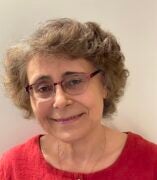
Maria Varelas, Professor

Maria Varelas

EDUCATION

1992 - Ph.D., University of Illinois at Chicago, Science Education

1988 - M.S., University of Rochester, Education

1985 - B.S., University of Athens, Greece, Physics

RESEARCH AND TEACHING INTERESTS

My teaching and research interests include: Classroom-based teaching and learning of science in urban settings; collaborative teacher action research; discourse in science classrooms; integration of science and literacy; science education reform in elementary school and college science classrooms. Focusing on the teaching and learning of science in elementary school and college classrooms, I engage in theoretical and empirical explorations of what it means to teach and understand science using primarily qualitative, interpretive approaches. I study various interplays that are enacted in science classrooms, namely the interplay between developing theories and collecting and analyzing data, between the individual student and the larger classroom community, between the teacher and the learner, between affective, cognitive, and social dimensions of experience, between reading, writing, drawing, talking, and doing science, between an individuals construction of meaning and the existing socio-cultural practice of science, between intellectual-thematic and social-organizational aspects of a classroom community. The collaborative teacher action research that I have been conducting has been supported by grants from the National Science Foundation (NSF), the State of Illinois, professional organizations, and the university, as I work with elementary school and college teachers to reform science education and explore the possibilities and challenges that emerge. 

SELECTED JOURNAL PUBLICATIONS

  1. Pappas, C. C., Varelas, M., Kokkino, S., Ye, L., & Ortiz, I.  (in press).  Dialogic strategies in read-alouds of English-language information books in a second-grade bilingual classroom.  Theory Into Practice.
  2. Varelas, M., Kane, J. M., & Wylie, C. D.  (2012).  Young Black children and science: Chronotopes of narratives around their science journals.  Journal of Research in Science Teaching, Online Early View.
  3. Varelas, M., Kane, J. M., & Wylie, C. D.  (2011).  Young African American children’s representations of self, science, and school: Making sense of difference.  Science Education, 95(5), 824-851.
  4. Ye, L., Varelas, M., & Guajardo, R.  (2011).  Subject-matter experts in urban schools: Journeys of enacted identities in science and mathematics classrooms.  Urban Education, 46(4), 845-879.
  5. Varelas, M., Pappas, C. C., Tucker-Raymond, E., Kane, J., Hankes, J., Ortiz, I., & Keblawe-Shamah, N.  (2010).  Drama activities as ideational resources for primary-grade children in urban science classrooms.  Journal of Research in Science Teaching, 47(3), 302-325.
  6. Varelas, M., & Kane, J. M.  (2009).  Language undertheorized: Conceptual metaphors and conceptual change.  Human Development, Letters to the Editor, May 29, 2009, 3-5.
  7. Plotnick, R., Varelas. M., & Fan Q.  (2009).  Physical World: An integrated earth science, astronomy, and physics course for elementary education majors.  Journal of Geoscience Education, 57(2), 152-158.
  8. Christodoulou, N., & Varelas, M. with Wenzel, S.  (2009).  Curricular orientations, experiences, and actions: Graduate students in science and mathematics fields work in urban high school classrooms.  Journal of Research in Science Teaching, 46(1), 1-26.
  9. Pappas, C. C., & Varelas, M, with Gill, S., Ortiz, I., & Keblawe-Shamah, N.  (2009).  Multimodal books in science-literacy units: Language and visual images for meaning making.  Language Arts, 86(3), 201-211.
  10. Varelas, M., Plotnick, R., Wink, D., Fan, Q., & Harris, Y.  (2008).  Inquiry and connections in integrated science content courses for elementary education majors.  Journal of College Science Teaching, 37(5), 40-45.
  11. Varelas, M., Pappas, C. C., Kokkino, S., & Ortiz, I.  (2008).  Students as authors.  Science & Children, 45(7), 58-62.
  12. Varelas, M., Pappas, C. C., Kane, J., & Arsenault, A. with Hankes, J., & Cowan, B. M.  (2008).  Urban primary-grade children think and talk science: Curricular and instructional practices that nurture participation and argumentation.  Science Education, 92(1), 65-95.
  13. Tucker-Raymond, E., Varelas, M., & Pappas, C. C. with Korzh, A. & Wentland, A.  (2007).  “They probably aren’t named Rachel:” Young children’s emergent multimodal narratives of scientist identities.  Cultural Studies in Science Education, 1(3), 559-592.
  14. Moje, E. B., Tucker-Raymond, E., Varelas, M., & Pappas, C.C.  (2007).  Giving oneself over to science: Exploring the role of subjectivities and identities in learning science.  Cultural Studies of Science Education, 1(3), 593-601.
  15. Varelas, M., & Pappas, C. C., with Rife, A.  (2006).  Exploring the role of intertextuality in concept construction: Urban second-graders make sense of evaporation, boiling, and condensation.  Journal of Research in Science Teaching, 43(7), 637-666.  (Joint lead authorship of the first two authors.)
  16. Varelas, M., & Pappas, C. C.  (2006).  Intertextuality in read-alouds of integrated science-literacy units in primary classrooms: Opportunities for the development of thought and language.  Cognition and Instruction, 24(2), 211-259.  (Fully co-authored.)
  17. Varelas, M., House, R., & Wenzel, S. (2005).  Beginning teachers immersed into science: Scientist and science teacher identities.  Science Education, 89, 492-516.
  18. Varelas, M., & Benhart, J.  (2004).  Welcome to Rock Day.  Science and Children, 42(1), 40-45.
  19. Pappas, C. C., Varelas, M., Barry, A., & Rife, A.  (2003).  Dialogic inquiry around information texts: The role of intertextuality in constructing scientific understandings in urban primary classrooms.  Linguistics and Education, 13(4), 435-482.  (Joint lead authorship of the first two authors; see also version as invited book chapter below.)
  20. Varelas, M., Becker, J., Luster, B., & Wenzel, S.  (2002).  When genres meet: Inquiry into a sixth-grade urban science class.  Journal of Research in Science Teaching, 39(7), 579-605.
  21. Varelas, M., Pappas, C. C., Barry, A., & O'Neill, A.  (2001).  Examining language to capture scientific understandings: The case of the water cycle.  Science and Children, 38(7), 26-29.
  22. Becker, J., & Varelas, M.  (2001).  Piaget’s early theory of the role of language in intellectual development: A response to DeVries’ Piaget’s social theory.  Educational Researcher, 30(6), 22-23.
  23. Varelas, M., Luster, B., & Wenzel, S.  (1999).  Meaning making in a community of learners: Struggles and possibilities in an urban science class.  Research in Science Education, 29(2), 227-245.
  24. Varelas, M., & Pineda, E.  (1999).  Intermingling and bumpiness: Exploring meaning making in the discourse of a science classroom.  Research in Science Education, 29(1), 25-49.
  25. Varelas, M.  (1997).  Third and fourth graders’ conceptions of repeated trials and best representatives in science experiments.  Journal of Research in Science Teaching, 34(9), 853-872.
  26. Varelas, M., & Becker, J.  (1997).  Children’s developing understanding of place value: Semiotic aspects.  Cognition and Instruction, 15(2), 265-286.
  27. Varelas, M.  (1996).  Between theory and data in a 7th grade science class.  Journal of Research in Science Teaching, 33(3), 229-263.
  28. Becker, J., & Varelas, M.  (1993).  Semiotic aspects of cognitive development: Illustrations from early mathematical cognition.  Psychological Review, 100, 420-431. (Fully co-authored.)
  29. Becker, J., Knight, E. Q., & Varelas, M.  (1993).  Meaning, love, and self in the classroom.  Teaching and Learning: The Journal of Natural Inquiry, 8(1), 11-15.
  30. Sosniak, L. A., Ethington, C. A., & Varelas, M.  (1991).  Teaching mathematics without a coherent point of view: Findings of the Second International Mathematics Study.  Journal of Curriculum Studies, 23, 119-131.

SELECTED BOOK CHAPTERS

  1. Tucker-Raymond, E., Varelas, M., Pappas, C. C., Thiede, K., & Keblawe-Shamah, N.  (in press).  Young children’s multimodal identity stories about being scientists.  In M. Varelas (Ed.), Identity construction and science education research: Learning, teaching, and being in multiple contexts.  Rotterdam, Netherlands: Sense Publishers.
  2. Varelas, M., Kane, J. M., Tucker-Raymond, E., & Pappas, C. C.  (2012).  Science learning in urban elementary school classrooms: Liberatory education and issues of access, participation, and achievement.  In B. J. Fraser, K. Tobin, & C. McRobbie (Eds.), Second international handbook of science education (pp. 91-103).  Dordrecht, The Netherlands: Springer-Kluwer.
  3. Varelas, M., Kane, J. M., & Pappas, C. C.  (2010).  Concept development in urban classroom spaces: Dialectical relationships, power, and identity.  In W.-M. Roth (Ed.), Re/Structuring science education: ReUniting psychological and sociological perspectives  (pp. 275-297).  Dordrecht, The Netherlands: Springer-Kluwer.
  4. Pappas, C. C., Varelas, M., Ciesla, T., & Tucker-Raymond, E. (2009).  Journal and book writing in integrated science-literacy units: Insights from urban primary-grade classrooms.  In K. Richardson Bruna & K. Gomez (Eds.), The work of language in multicultural classrooms: Talking science, writing science (pp. 13-47).  New York: Routledge.
  5. Varelas, M., Pappas, C. C., Tucker-Raymond, E., Arsenault, A., Kane, J., Kokkino, S., & Siuda, J. E.  (2007).  Identity in activities: Young children and science.  In W.-M. Roth & K. Tobin (Eds.), Science, learning, and identity: Sociocultural and cultural-historical perspectives (pp. 203-242).  Rotterdam, Netherlands: Sense Publishers.
  6. Roth, W.-M., Varelas, M., Hwang, S., & Tobin, K.  (2007).  Activity, agency, passivity.  In W.-M. Roth & K. Tobin (Eds.), Science, learning, and identity: Sociocultural and cultural-historical perspectives (pp. 243-256).  Rotterdam, Netherlands: Sense Publishers.
  7. Varelas, M.  (2007).  Collaborations, multiple voices, tensions, dialectics, and fervor: The social construction of a science education career.  In K. Tobin & W.-M. Roth (Eds.), The culture of science education: Its history in person (pp. 263-274).  Rotterdam, Netherlands: Sense Publishers.
  8. Varelas, M., Pappas, C. C., & the ISLE Team.  (2006).  Young children’s own illustrated information books: Making sense in science through words and pictures.  In R. Douglas, M. Klentschy, & K. Worth (Eds.), Linking science and literacy in the K-8 classroom (pp. 95-116).  Arlington, VA: National Science Teachers Association Press.  (Joint lead authorship of the first two authors.)
  9. Varelas, M., Pappas, C. C., & Rife, A.  (2004).  Dialogic inquiry in an urban 2nd grade classroom: How intertextuality shapes and is shaped by social interactions and conceptual understandings.  In R. Yerrick & W-M. Roth (Eds.), Establishing scientific classroom discourse communities: Multiple voices of research on teaching and learning (pp. 139-168).  Mahwah, NJ: Erlbaum.
  10. Bowen, M., Varelas, M., Roth, W-M., & Yerrick, R.  (2004).  Metalogue: Lifeworld language, scientific literacy, and intertextuality.  In R. Yerrick & W-M. Roth (Eds.), Establishing scientific classroom discourse communities: Multiple voices of research on teaching and learning (pp. 169-174).  Mahwah, NJ: Erlbaum.
  11. Varelas, M., Gallego, M., Yerrick, R., & Roth, W-M.  (2004).  Metalogue: Scientific vs. spontaneous concepts at work in student learning.  In R. Yerrick & W-M. Roth (Eds.), Establishing scientific classroom discourse communities: Multiple voices of research on teaching and learning (pp. 315-320).  Mahwah, NJ: Erlbaum.
  12. Pappas, C. C., Varelas, M., with Barry, A., & Rife, A.  (2004).  Promoting dialogic inquiry in information book read-alouds: Young urban children’s ways of making sense in science.  In W. Saul (Ed.), Crossing borders in literacy and science instruction: Perspectives on theory and practice (pp. 161-189).  Newark, NJ: International Reading Association.

BOOKS IN PROGRESS

Varelas, M. (Ed.)  (forthcoming, 2012).  Identity construction and science education research: Learning, teaching, and being in multiple contexts.  Rotterdam, Netherlands: Sense Publishers.

Varelas, M., & Pappas, C. C.  (forthcoming, 2012).  Children’s ways with science and literacy: Integrated multimodal enactments in urban elementary classrooms.  New York: Routledge.

HONORS AND AWARDS

2008-2011 - University Scholar, University of Illinois

2008 - WOW Award, University of Illinois at Chicago

2006 - Award for Excellence in Teaching, University of Illinois at Chicago

2003 - Teaching Recognition Program Award, University of Illinois at Chicago

2003 - Silver Circle Award for Excellence in Teaching, University of Illinois at Chicago

2000 - Silver Circle Award for Excellence in Teaching, University of Illinois at Chicago

1997 - Teaching Recognition Program Award, University of Illinois at Chicago

1993 - Outstanding Dissertation Award, American Educational Research Association, Division B: Curriculum Studies

1987 - May Eddy Butler Walker Scholar, Promising Educator Award, University of Rochester, Rochester, NY

1981-1985 - National Scholarship for Outstanding Performance, Department of Physics, University of Athens, Athens, Greece, awarded separately for university entrance examination and for each of the four student years 

SELECTED GRANTS

2012-2014, Equal PIs: M. Varelas, D. Martin, & J. Kane, Co-PI: G. Karabatsos, Content Learning and Identity Construction (CLIC): Science and Mathematics Learning among African American Students in Urban Elementary Schools. UIC Vice Chancellor for Research: Areas of Excellence Award.  $179,94.

2008-2011, PI: M. Varelas, Co-PI: C. Pappas, Integrated Science-Literacy Enactments (ISLE) in Chicago Public School (CPS) Early Elementary Grades.  Polk Bros. Foundation.  $300,000.

2004-2008, PI: M. Varelas, Co-PI: Pappas, Integrated Science-Literacy in Urban Early Elementary Classrooms: Exploring Scientific Understandings and Discourse Genres.  National Science Foundation (Award #: REC-0411593).  $1,054,088.

2004-2009, Equal PIs: D. Wink, M. Varelas, T. Moher, M. Nishimura, & S. Wenzel, Scientists, Kids, and Teachers (SKIT): A GK-12 partnership with the Chicago Public Schools.  National Science Foundation (Award #: DGE-0338328).  $2,027,287.

2004-2006, PI: J. Baldwin, Co-PIs: D. Wink & M. Varelas, UIC Initiative for Teacher Content Education.  Illinois Board of Higher Education.  $468,000.

2003-2006, PI: M. Varelas, Co-PIs: D. Wink, J. Ellefson-Kuehn, Y. Harris, & D. Lehman, Integrated Science Courses for Elementary Education and Non-Science Majors.  National Science Foundation (Award #: DUE-0311624).  $128,638.

2000-2003, Equal PIs: D. Wink, M. Varelas, W. Freeman, T. Moher, P. Wagreich, University of Illinois at Chicago Graduate Fellows in K-12 Education.  National Science Foundation (Award #: DGE-9979537).  $1,317,220. 

1999-2003, Equal PIs: P. Wagreich, M. Varelas, D. Wink, S. Wenzel, & D. Fisher, University of Illinois at Chicago—Community College Collaborative for Excellence in Teacher Preparation.  National Science Foundation (Award #: DUE-9852167).  $1,553,117.

SELECTED PROFESSIONAL POSITIONS & ACTIVITIES  

  • Elected Member, Executive Board of NARST: A Worldwide Organization for Improving Science Teaching and Learning Through Research (2012-present)
  • Co-Editor of the Learning section of Science Education (2006-present)
  • Higher Education Editor of the journal of the Illinois Science Teachers Association (ISTA), Spectrum (2004-present)
  • Member of the Editorial Board of Science Education (2002-present)
  • Co-Chair of the National Association for Research in Science Teaching (NARST) Early Career Research Award Selection Committee (2011-present)
  • Consultant to the National Research Council (NRC) project “Conceptual Framework to Guide the Development of Next Generation Standards for K-12 Science Education” (2010)
  • Member of the National Association for Research in Science Teaching (NARST) Early Career Research Award Selection Committee (2010-2011)
  • Member of the National Association for Research in Science Teaching (NARST) Journal of Research in Science Teaching (JRST) Award Selection Committee (2010-2011)
  • Member of the National Science Foundation (NSF) Committee of Visitors (COV) for REESE and DRK-12 programs (2009)
  • Member of the Advisory Board of the National Science Resources Center of the National Academies and the Smithsonian Institution, and Scientific & Educational Contributor to K-2 books for the Science and Technology Concepts (STC) curriculum, a research-based, inquiry-centered science program for students (2008-2010)
  • Member of the planning committee for the 2005 National Science Teachers Association (NSTA) Regional Convention, Chicago, IL (2004-2005)
  • Member of the Editorial Board of the Journal of Research in Science Teaching (1999-2002)
  • Member of the Ad Hoc Committee on Practitioner Research, National Association for Research in Science Teaching (NARST) (2000-2008)
  • Co-Chair of the Science Work Group, Chicago Teacher Pipeline Project (CTPP), a four-university Teacher Quality Partnership (TQP) grant from the U.S. Department of Education focusing on elementary school teacher preparation (2009-2014)

ADDITIONAL INFORMATION

9/24/2008   Maria Varelas has been featured in UIC NEWS for being named University Scholar.

11/15/2006  Maria Varelas has been featured in UIC NEWS for her Award for Excellence in Teaching.

5/28/2003  Maria Varelas has been featured in UIC NEWS for being a Silver Circle Award winner.

4/26/2000  Maria Varelas has been featured in UIC NEWS for her Silver Circle Award.